
Inside a Pack Derby: What a Well-Run Race Day Actually Looks Like
Event Coverage | September 10, 2026

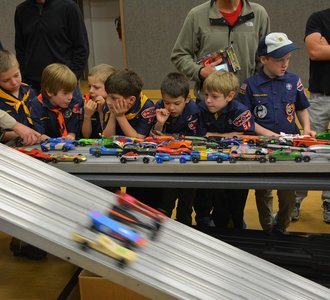
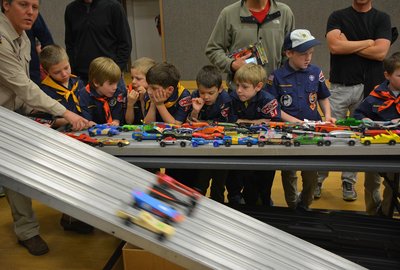
From the outside, a pinewood derby looks simple. Cars line up, a starting gate drops, and a winner emerges. From the inside, it is a small logistical miracle. A well-run pack derby involves dozens of small decisions, a team of volunteers who know their roles, and a timeline that keeps things moving without feeling rushed. Here is what that looks like when it is done well.
The work starts weeks before race day. A race committee, usually three to five people, handles registration, track setup, and communications. They confirm the venue, check that the track and timer are in working order, and line up volunteers for the day itself. The best committees assign roles in advance rather than hoping people will step up on the morning of the event.
The Rhythm of Race Day
Check-in opens about an hour before the first heat. Volunteers at the check-in table inspect each car for rule compliance: weight, length, width, and any pack-specific requirements. They weigh the car, confirm the owner's name and den, and place it in the impound area. A good check-in process is fast but thorough, and it includes a clearly posted list of rules so families can self-check before they reach the table.
Once check-in closes, the race committee runs a quick orientation for the volunteers. The starter explains how the starting gate works. The timer operator confirms the software is ready. The staging volunteers review how cars move from impound to the starting line and back. This five-minute huddle prevents most of the confusion that can otherwise slow the race.
The race itself runs in heats, usually organized by den or by a bracket. A good announcer keeps the crowd engaged, calls each heat clearly, and gives the racers a moment to find their cars before the next heat begins. Between heats, staging volunteers move cars efficiently and keep the lanes organized. The timer operator records results and posts them where families can see them.
One of the most underrated roles is the person who handles disputes and questions. There is always at least one family who believes a result was recorded incorrectly or that a car was placed in the wrong lane. Having a calm, knowledgeable volunteer dedicated to those conversations keeps the race moving and keeps everyone feeling heard.
Finishing Strong With Awards and Cleanup
When the final heat ends, the committee tallies results and prepares awards. Good derbies recognize more than just the fastest cars. Design awards, best-in-show, and den-level recognition give more kids a moment in the spotlight. The awards ceremony should be short and enthusiastic, with time for photos and congratulations.
Cleanup is where the best-run derbies really show their quality. A checklist for track teardown, table folding, and trash removal means the venue is left in good condition and the committee is not stuck there for two hours after everyone else has gone home. Volunteers who know their cleanup tasks in advance can finish the job in thirty minutes.
None of this happens by accident. It happens because a small group of people planned ahead, communicated clearly, and treated race day as a shared responsibility. If you are involved in running a derby, steal these ideas. If you are a parent showing up with a car, take a moment to thank the volunteers. They are the reason your racer gets a fair shot at the finish line.
-

-

-
From the Pack to the District: What Changes When the Competition Gets Bigger
Sep 12, 2026Event Coverage

-

-
Graphite, Oil, or Nothing at All: Choosing a Lubricant for Your Pinewood Derby Axles
Oct 1, 2026Community

-
When Your Car Wins the Pack but Loses the District: A Post-Race Autopsy Guide
Aug 26, 2026Car-Building Tips

-
Workshop Safety for Young Builders: Tools, Glue, and Keeping Fingers Intact
Aug 31, 2026Event Coverage

-

-

Pinewood Pulse
A practical guide to planning, shaping, and finishing a pinewood derby car that turns heads on the display table.