


When Your Car Wins the Pack but Loses the District: A Post-Race Autopsy Guide
Race Results | September 16, 2026
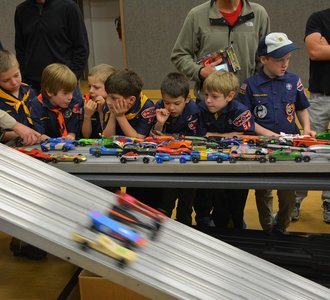
It happens every season. A car dominates the pack race, wins every heat by a comfortable margin, and then shows up at the district derby and finishes in the middle of the pack. The family is confused, the kid is disappointed, and everyone wants to know what went wrong. The honest answer is that sometimes nothing went wrong. The competition simply got better. But there are also real, diagnosable reasons a car can lose speed between one event and the next.
The first step is to resist the urge to rebuild immediately. Instead, treat it like a puzzle. Gather what you know: the car's times at the pack race, its times at the district race, and any notes about how it behaved on the track. Even rough recollections are useful. Did it wobble? Did it drift toward one side? Did it seem slow off the starting pin or slow at the finish?
The Usual Suspects After a Step Up in Competition
One of the most common issues is track variation. Different tracks have different surfaces, different starting mechanisms, and different lengths. A car tuned for a smooth aluminum track may behave differently on a wooden track with slight seams. If your district race uses a different track than your pack race, that alone can explain a drop in performance.
Another frequent culprit is handling. At the pack level, a car with imperfect alignment can still win if it has enough weight and a decent start. At the district level, the margin between first and tenth is often measured in thousandths of a second. A car that drifts into the rail will lose more time there than it ever did against local competition. Check the wheel gaps, the axle angles, and whether the car tracks straight when rolled on a flat surface.
Weight placement is another factor. A car that was tuned for one track length may not be optimized for a longer or shorter one. If the district track is longer, a car with too much weight toward the rear may not have enough stability at speed. If it is shorter, a car with a forward bias may not accelerate as quickly. These are subtle differences, but they matter when the field is tight.
Finally, consider preparation drift. A car that sat in a box for two weeks between races may have picked up dust in the wheel bores, or the lubricant may have dried out or migrated. A quick inspection and a light re-prep can sometimes restore most of the lost performance.
What to Do With What You Learn
The goal of a post-race autopsy is not to assign blame. It is to build a better car next season. Write down what you observed, what you changed, and what you would do differently. If the car drifted, note that for next year's alignment process. If the track was different, note that for next year's tuning. If the competition was simply faster, note that too, and use it as motivation rather than frustration.
It also helps to talk to other families who made the same jump. Most experienced derby parents are happy to share what they have learned, and their insights are often more practical than anything you will find online. A five-minute conversation at the district race can save you a season of trial and error.
Losing at the next level is not a failure. It is information. The cars that keep improving are the ones whose builders treat every race, win or lose, as a chance to learn something new.
-

-

-
Reading a Race Bracket: How to Follow Your Pack's Derby Without Getting Lost
Oct 4, 2026Race Results

-

-
From the Pack to the District: What Changes When the Competition Gets Bigger
Sep 23, 2026Car-Building Tips

-

-
Graphite, Oil, or Nothing at All: Choosing a Lubricant for Your Pinewood Derby Axles
Sep 17, 2026Race Results

-

-
Workshop Safety for Young Builders: Tools, Glue, and Keeping Fingers Intact
Sep 10, 2026Car-Building Tips

Pinewood Pulse
How to set up a safe and productive pinewood derby workspace where kids can do real work without real injuries.